• Skip to main content
  • Skip to footer

Project Schoolhouse

- Dennis Passovoy, Project Schoolhouse Board Member

  • About Us
    • Meet Our Team
    • Financials
    • Careers & Volunteer
    • Contact Us
  • Our Work
  • Progress
    • Stories
    • Newsletter
  • Get Involved
    • Info Sessions & Events
    • Fundraise
    • Partner With Us
    • Travel
  • Donate

Project Schoolhouse

Ponsoña Phase II: Early Water Access Is Here, and Homes Are Next

October 30, 2026 by Project Schoolhouse

Families in the Ponsoña region of Nicaragua are already drinking clean water from public access points, including at schools, while the team and communities work to bring the network to every home. With 75% of the Phase II network complete and construction months ahead of schedule, that goal is getting closer faster than planned.
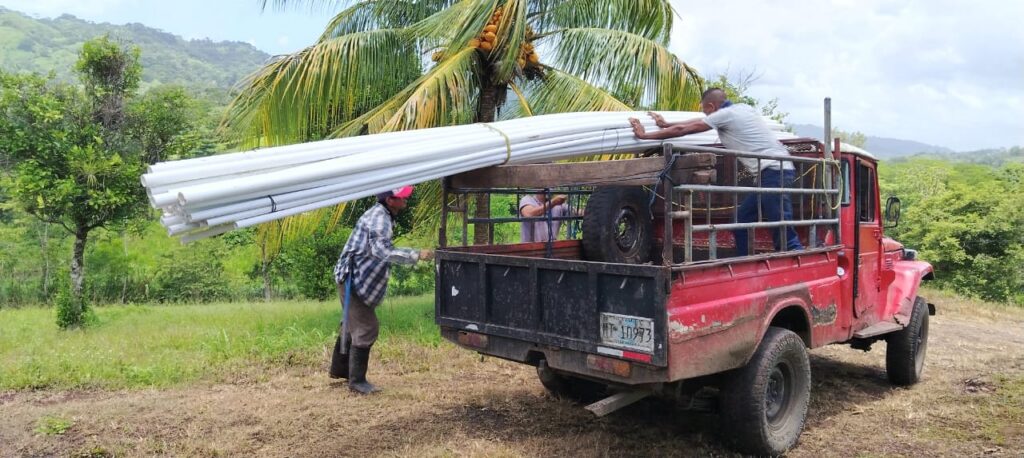
Early Water Access Is Already Changing Daily Life

Phase II is already serving families in Cabecera Paiwas, La Libertad, and Puente Paiwas through public water access points:

  • Cabecera Paiwas: a new public water point is now serving the community.
  • Puente Paiwas: three public water points have been enabled.
  • Schools and churches in these communities are part of the project, so students, worshippers, and neighbors have a safe source close by.

These access points are an important first step. Families no longer have to rely on distant and unsafe sources for every drop they use.

The Goal: Clean Water at Home

Public water points are not the finish line. The ultimate goal is water in every home. When water flows at the household level, girls and women no longer have to spend hours carrying it, and families no longer have to store it in open containers where it can become contaminated and lead to water-borne illness. Clean water at home means more time for school, work, and better health for everyone.
Months Ahead of Schedule, Thanks to the Families Themselves

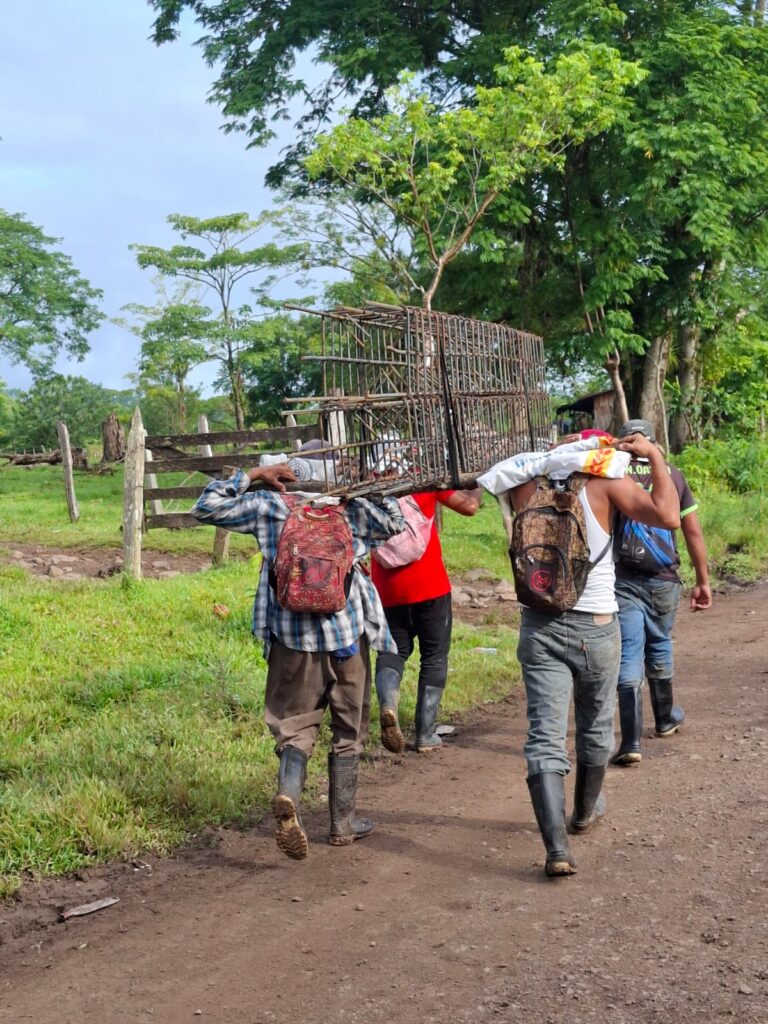
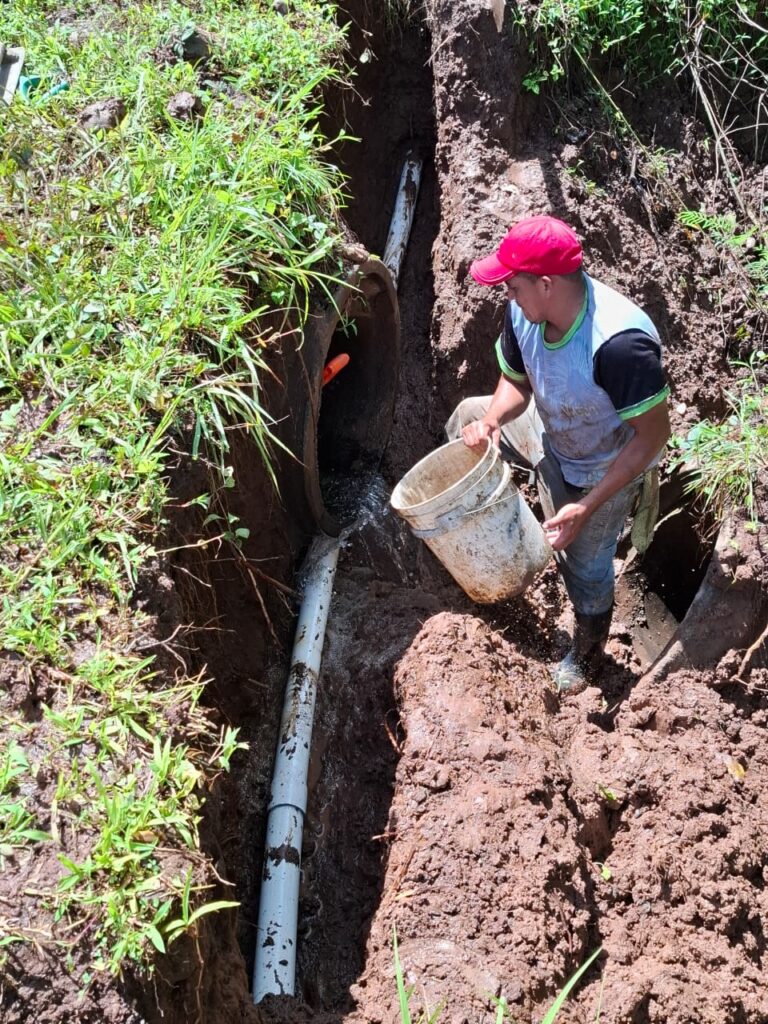
The project team is months ahead of schedule, thanks to the communities’ commitment. Families have gone above and beyond, volunteering their time and labor to dig the trenches that will carry water to their own neighborhoods. Community members have now excavated more than 21 kilometers of trenching. After completing 16.7 kilometers by August, they added another 4.4 kilometers in September.

The work isn’t only underground. Where the network crosses streams, roads, and other natural obstacles, the project needs specially designed overhead pipeline crossings. A second aerial pipeline bridge has been built, with more planned. Each is small next to the kilometers of trenching, but each is essential to carrying water toward homes.

The Road Ahead

The remaining work is clearly defined:

  • Paiwitas sector: 3.5 kilometers of distribution network still to excavate
  • Overhead crossings: construction of additional bridges continues
  • Household water access points and meters: installation to follow

Built by Communities, Backed by Generous Partners

What began as a plan to connect communities to a shared water source is now a physical network across the region. Families who prioritize clean water access are building it, with support from Project Schoolhouse donors and partners.

We remain deeply grateful to The Church of Jesus Christ of Latter-day Saints for its financial support of this multi-community project. Its generosity has helped make possible a system that will serve families across the region for years to come.

Step by step, kilometer by kilometer, clean water is moving closer to the families still waiting, and to the day it flows from a tap in their own homes.


Sign up to receive our quarterly newsletter here!


Filed Under: Clean Water, Community Engagement, Education, Meet Stories, News From the Field, People Driven Development, Water Tagged With: October 2026 Newsletter

October 2026 – Message from our Executive Director

October 30, 2026 by Project Schoolhouse

Summer in Nicaragua: a new office, water projects ahead of schedule, and what we’re learning

Dear Project Schoolhouse Family, 

This summer flew by, and our team in Nicaragua has been busy. Here’s what you’ve made possible.

Thanks to the leadership and problem-solving of our head builder, Manuel S., and the hard work of our field team, Jairo, Luis Enrique, Luis Alberto, Mario and Deybin, the multi-community water and sanitation project in the Ponsoña region is months ahead of schedule. I encourage you to click through to read the full update and see photos below. 

We have a new office in Río Blanco! For 20 years, our first employee, bookkeeper, and administrator, Maria Inés, welcomed Project Schoolhouse to office out of her own home. We are grateful for her generosity. We now have a professional space in the heart of Río Blanco. It gives our growing team space to work and host community leaders as we train to strengthen their capacity to maintain the water systems we’ve built over the past 20 years. Special thanks to Erica, who supports our administrative work and made the new office such a welcoming space.

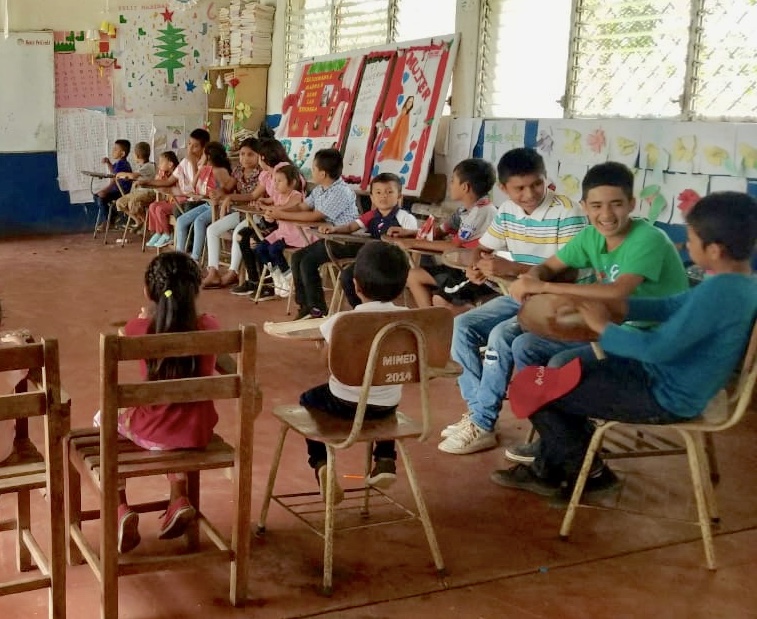
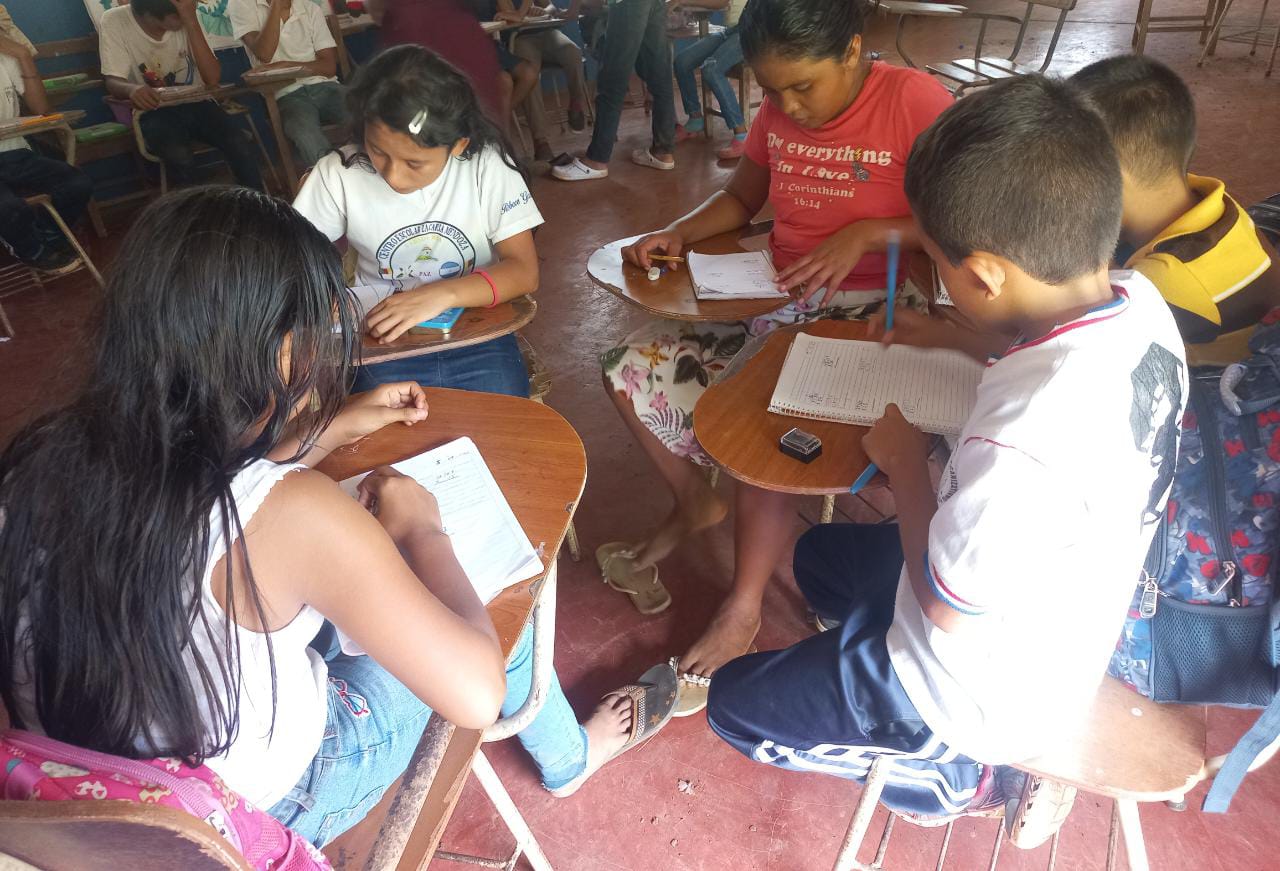
Under Cristian’s leadership, our after-school programs are helping children grow more confident in reading, writing, and creative storytelling, and more than 90% of them attend each session. Moms take turns cooking a hot lunch for the school, so every child is nourished and ready to learn.

Manuel A., our Programs Coordinator, has visited families we’ve partnered with for the past 20 years. He’s asking what has worked, what we can improve, and where communities need support to keep their water systems working and their water safe. We have learned so much. Supporting these prior-year project communities will be a focus for 2027. 

Finally, a huge shout-out to Ramiro, our Director of Operations. He’s been with us for a year now and has brought invaluable insight and leadership to our growing team.

Thank you all for standing with us and supporting this work. 

With gratitude,

Selina
Executive Director

–

Click here to download and read the full 2025 progress report.


Sign up to receive our quarterly newsletter here!

Filed Under: Community Engagement, News From the Field, Newsletter, People Driven Development, Water Tagged With: October 2026 Newsletter

The Power of Trust: How We’re Funded Shapes the Work We Can Accomplish

July 6, 2026 by Project Schoolhouse

Written by Dennis Passovoy, Board Member

When Victorina finally had safe water flowing into her home after 75 years of life without it, no one asked her to document the milestone in triplicate. The water was simply there — clean, gravity-fed, dependable — because the people who believed in this work trusted the people doing it.

That trust is not a small thing. In the world of nonprofit funding, it is actually quite rare. And it makes an enormous difference — not just to us as an organization, but to the communities in Nicaragua whose lives we are here to help transform.

We want to take a moment to talk about something that doesn’t often appear in these pages: how we are funded, and why it matters so much to the work.

What Is Trust-Based Philanthropy?

Trust-based philanthropy is built on a simple but powerful idea: funders who trust the organizations they support and give them flexibility produce better outcomes than those who do not. In practice, this means unrestricted, multi-year grants with streamlined reporting — funders doing their due diligence upfront, then stepping back to let the experts do what they do best.

The alternative is common and costly. Many grant relationships require exhaustive applications, rigid reporting timelines, and restrictions that prohibit funding from covering salaries or overhead — precisely the things that allow good work to get done. And when circumstances on the ground change, as they inevitably do in remote communities, the flexibility to adapt is often missing.

The Hidden Cost of Distrust

We have worked in some of the most remote communities in Nicaragua for two decades. Our team is lean and deeply expert. What we cannot afford is time and focus diverted away from that mission.

When applications require months of compliance documentation, that is time not spent on project planning or community relationships. When restrictions prohibit covering operational costs, we are left stitching together funding sources just to keep the lights on. The administrative overhead that highly controlled philanthropy demands has a real human cost — borne by the communities furthest from the decision-making table.

We clearly understand the need for oversight. “Trust” doesn’t mean “hand over the check and step away.” It means trust but verify.

What Trust Looks Like in Practice

We have been fortunate to be supported by donors and foundations who have chosen to trust us — reviewed our financials and track record, visited communities where we’ve worked, and then given us the flexibility to put their investment to work the way we know best. That trust is something we earn and are accountable for every single day.

The most powerful recent example is a catalyzing grant from the LDS Foundation, which funded the Ponsoña multi-community water, school, and sanitation project — the largest undertaking in Project Schoolhouse’s history. Rather than prescribing narrow deliverables, the LDS Foundation invested in our mission and proven approach, trusting us to apply it across seven communities at once. Critically, it allowed us to invest in in-country leadership and community organizing capacity — something a more restrictive grant may not have permitted — making us a stronger partner for every community in our pipeline.

This is also a natural expression of our community-centered model. We only go where we are invited. We only build what communities have asked for. When our funders extend that same philosophy to us — trusting the experts closest to the work — it creates a virtuous cycle all the way from donor to schoolhouse to student.

Project Schoolhouse and LDS Teams Visiting Communities in 2023

An Invitation

If you are a donor to Project Schoolhouse, thank you. Your trust is the foundation on which everything we do is built. If you are considering a larger gift or partnership, we welcome that conversation.

Victorina’s water is still running. The children of La Ponsoñita are learning in a new school. Seven communities above Rio Blanco are closer to safe water than they have ever been.

That is what trust makes possible.

To learn more about partnering with Project Schoolhouse, visit projectschoolhouse.org/partner or reach out to us at info@projectschoolhouse.org.


Watch our short film “Victorina”


Sign up to receive our quarterly newsletter here!

Filed Under: Community Engagement, Interns, News From the Field, People Driven Development Tagged With: July 2026 Newsletter

Ponsoña Water & Sanitation Project: Phase 1 is Complete!

April 15, 2026 by Project Schoolhouse

In 2025, Project Schoolhouse launched the most ambitious infrastructure effort in our 20-year history: a unified water and sanitation project serving seven communities in the La Ponsoña region of Matagalpa, Nicaragua. At the heart of this effort is a single mountain spring with enough flow and pressure to supply clean, potable water to more than 2,000 people — leveraging one water source to multiply impact across an entire region. 

Volunteer community members building the primary water capture dam 

For an entire year, 25 to 30 community volunteers showed up each day, rain or shine, working toward the dream of clean water in their homes. Construction began with transporting materials up the mountain by truck and on foot, and in the steepest stretches, mules carried what trucks could not. Community members cleared the work site by hand and carried thousands of pounds of sand and cement up the mountain. Boulders dug out of the river were used to form the foundation of the filtration system 

2025 Water Project Accomplishments 

  • Mountaintop spring capture completed 
  • Slow-sand filtration system built at summit 
  • Three pressurization tanks installed along the distribution route 
  • Chlorination units added to ensure water safety 
  • Primary conduction lines trenched from the summit to the pressurization tanks 
  • Distribution lines trenched (by hand!) to reach 74 family homes 
  • 74 families in 4 communities now have clean water in their homes and at their schools! 

This completed mountain-top water infrastructure forms the backbone of the entire regional water system — serving the four Phase 1 communities now and laying the foundation for Phase 2 expansion in 2026. 

Sanitation: A Foundation for Health & Dignity 

Clean water alone is not enough. Project Schoolhouse’s comprehensive approach to building life-saving infrastructure ensures that every community we serve also receives the sanitation systems needed to protect the watershed and the health of the families in the community. 

Community members, including children, took an active role in building their own latrines. This hands-on participation is central to Project Schoolhouse’s model: when families help build a project, they take ownership and maintain it well into the future. 

2025 Sanitation Accomplishments 

woman in front of new latrine
  • 74 sanitary latrines constructed for homes in four communities 
  • 2 handwashing stations installed at community schools
  • Every family served trained in proper latrine use and maintenance
  • Every family served trained in proper latrine use and maintenance
  • Community hygiene education classes provided to families and school children

We particularly want to appreciate the partnership of The Church of Jesus Christ of Latter-day Saints and Latter-day Saint Charities Australia for trusting in Project Schoolhouse to deliver progress towards our shared mission, supporting our neighbors in need.

Community member with new latrine
A girl helping build her family’s new latrine
Pouring cement for latrine foundation

Sign up to receive our quarterly newsletter here!


Filed Under: Clean Water, Community Engagement, Education, Meet Stories, News From the Field, People Driven Development, Water Tagged With: 2025 Progress Report, April 2026 Newsletter

Ponsoña Project Update: We Did It — Phase 1 is Complete!

December 19, 2025 by Project Schoolhouse

Written by Board VP, Shannon Fohn

Thanks to extraordinary support and a lot of hard work, Project Schoolhouse and the communities in the La Ponsoña region have successfully completed Phase 1 of our ambitious two-year project to reach seven remote communities with clean water, schools and sanitation. Together, we’ve made life-changing progress.  

Our 2025 accomplishments include:

  • Four communities now have clean water systems and sanitary latrines, bringing health, dignity, and opportunity to 74 families.
  • Two schools received critical additions and repairs, finished just in time for the start of the 2025 school year.

This progress did not come easily. This year brought unusually heavy rains, and transporting materials to the water source at the top of the mountain was harder than anyone imagined — trucks got stuck in the mud, roads washed out, and construction slowed. But communities didn’t give up, and neither did we.

One of the most complex parts of the project — building the shared mountain-top water infrastructure — is now complete. This includes the water source capture, slow-sand filtration system, multiple pressurization tanks, and chlorination units. All of the materials had to be hauled to the top of the mountain, an arduous trek by 4-wheel drive vehicles and, for the final stretch, by mules. This incredible feat will not only serve the four communities now benefiting but will also support the remaining three communities, 119 additional families, as we expand the distribution grid to the remaining communities in 2026.


Community members and team digging trench for system pressurization valves.

All seven communities have poured a year of effort, sweat, and determination into this shared system, and they’ll continue working alongside us through Phase 2. Staying motivated over such a long and demanding effort hasn’t been easy and coordinating the labor of 7 communities has been a real challenge, but achieving Phase 1 has energized everyone. The finish line feels real — and it’s thanks to you.

Your generosity is transforming lives.
Thank you for believing in this work, for standing with these communities, and for helping make sustainable progress possible. Phase 2 is ahead — and with your continued partnership, we’ll reach even more families with clean water, strong schools, and brighter futures.

We particularly want to appreciate the partnership of The Church of Jesus Christ of Latter-day Saints and Latter-day Saint Charities Australia, for trusting in Project Schoolhouse to deliver progress towards our shared mission, supporting our neighbors in need. 

This is what Manuel Selva Garcia, Head of Construction, had to say about this great achievement:

“Hola, buenas tardes. Me siento agradecido y feliz por ese gran logro que hemos  alcanzado. Ya que fue un gran reto haber terminado la primera  fase, a base de dificultades, lo logramos con  todo el personal de oficina y de campo. Esperemos seguir con ese entusiasmo el año que viene para la segunda fase de este proyecto.Y doy gracias a Dios por cuidar de estas lindas personas con las que siempre trabajamos de la mano, con respeto y coordinación. Este proyecto  fue  un gran desafío  para mí  ya que  con  el poco  personal  ísimos bastante.” 

“I feel grateful and happy about this outstanding achievement we have completed. Completing Phase one was a major challenge, and despite many difficulties, we accomplished it together with our office and field team. We hope to continue next year with the same enthusiasm for phase two of this project.

I also thank God for watching over these wonderful people we work with, always hand in hand, with respect and coordination.

This project was a great challenge for me, but even with a very small team, we were able to achieve amazing things.” 

– Manuel Selva Garcia 

A boy is putting the final touches on his own family’s water access point.
A girl helping build her family’s new latrine
Pouring cement for latrine foundation

Sign up to receive our quarterly newsletter here!


Filed Under: Clean Water, Community Engagement, Education, Meet Stories, News From the Field, People Driven Development, Water Tagged With: December 2025 Newsletter

Building Hope: Meet Galer and Oscar, Finding Promise in Ponsoña’s New School and Water Project

October 19, 2024 by Project Schoolhouse

By Adriana Banchs

With construction in La Ponsoñita in full swing, the air is filled with energy and excitement as community members anticipate the opportunities that lie ahead. Whether it’s the books in the soon-to-be library or the drinking water available just steps away from their classrooms, students are eager to share how this project will shape their daily lives and futures. Among those I had the privilege of speaking with were Oscar, a 4th-grade student, and his dedicated teacher, Geler.

From the moment I sat down virtually with Geler, it was clear how much love and togetherness permeates this rural, lush community. With over 20 years of experience as a primary school teacher, Geler reflected on his decision to trade teaching in his city for the long commute to La Ponsoñita. “I like it a lot more,” he said, as he painted a vivid picture of a tight-knit, supportive network of families and students. When he was hospitalized recently, Geler recounted how families visited him, bringing food and thoughtful offerings. It was a testament to the deep bonds he shares with the community—a place he clearly holds close to his heart.

While Geler spoke with immense gratitude for his school family, he also shed light on the significant challenges the community faces. As a teacher responsible for teaching 54 students from 1st to 6th grade, he balances an incredible workload. Teaching such a wide range of ages is demanding, especially when trying to meet the diverse academic needs of each student. The cramped conditions in the current school make this even more difficult.

Due to limited space, many students are taught outside, which becomes particularly problematic during Nicaragua’s rainy season. When rain forces the children inside, the small, overcrowded classroom makes it nearly impossible for them to focus. “Keeping all the students engaged becomes an issue, and the students get restless,” Geler explained.

He also shared insights into why students sometimes drop out, citing a lack of educational materials, long walks to school, and parents’ concerns about their children walking alone. One point that stood out was how quickly students’ backpacks and notebooks wear out, often damaged by the rain during their daily commutes.

Despite the current challenges, Geler remains hopeful and excited about the future for his students. He knows that the school will improve attendance, help the kids feel more welcome and comfortable in the space, and spark a greater love for learning in the community. “The community will have another vision for the future in both the children’s and parents’ lives” he told me. “The parents will see an environment that fosters learning,” referencing not only how the new school will satisfy functional necessity, but also boost morale throughout the community. 

One student who shares this optimism is 13-year-old Oscar. He eagerly agreed with his teacher about the positive changes ahead. Oscar described his typical day as a student at La Ponsoñita, which includes a 30-minute walk through the mountains—sometimes alone, other times with friends. He brings water from a creek close to his house and hopes it will last him the full day. If it doesn’t he has to wait until he gets home to quench his thirst. 

With dreams of his own, Oscar hopes to become an engineer, envisioning a future where he’s the one working on construction projects like the one transforming his community. Envisioning his school, Oscar is the most excited for the ample room, new books, and clean water. With all of these needs met, Oscar says it will be easier to pay attention at school and really dive into the lesson plans. Students will no longer be cramped, thirsty, and overwhelmed by the constant movement and noise. Oscar stated that the new school already looks beautiful, and he is proud to be a part of La Ponsoñita.

After hearing Geler and Oscar’s testimonies about being a part of this community, it is clear that La Ponsoña and its surrounding areas feel a sense of ownership and pride over the work that’s taking place throughout the region. They are not only looking forward to the completion of La Ponsoñita, but also to lasting change and growing opportunity in the lives of those around them, and those to come. 

Sign up to receive our quarterly newsletter here!

Filed Under: Clean Water, Community Engagement, Education, Meet Stories, News From the Field, People Driven Development, Water Tagged With: October 2024 Newsletter

New Project Update: Ponsoña Multi Community Project

October 19, 2024 by Project Schoolhouse

Community Meeting with beneficiary families of the La Ponsoña Water and School Project

Last month we broke ground on the multi-community water, sanitation and school project in the region of La Ponsoña, Matagalpa. This first stage of the project will build the spring capture, water tanks and distribution lines that will ultimately provide safe, potable water to the homes and schools in 7 communities, as well as build sanitary latrines, handwashing stations and schools in each community. 

The water project started by hauling equipment up the mountain and hand-clearing the work site. Shortly after, the task began of collecting boulders from the river that will be used to form the first stage of the water filtration process. 

Coordinating 7 communities of workgroups is a monumental task in itself, and in this photo are community leaders meeting with Project Schoolhouse staff in our offices in Rio Blanco. 

The first school we tackled in this multi-community project is La Ponsoñita. I’ve been visiting this school for years now, and I am relieved that we finally secured the funding to renovate the existing building and add 2 additional classrooms. The student body of 54 students has outgrown this small classroom, and sadly, a colony of bats has taken up residence in the ceiling, leaving children vulnerable to possible contagious and respiratory health risks. 

We’re happy and relieved to share that we have torn out the old ceiling to be replaced with a new one. These students should have a beautiful new school by early 2025!

Photos of the new classrooms for the La Ponsoñita School

Stay tuned for upcoming updates on this new project through the year!

Filed Under: Community Engagement, News From the Field, People Driven Development Tagged With: October 2024 Newsletter

El Aulo After-School Club Program Update

December 21, 2023 by Project Schoolhouse

A successful year for the Club!

We received this update from Cristian, who leads the volunteer effort of the After-School Club program:

“As the program coordinator, I am proud to call this school year a huge success. With the help of volunteers and the teacher at the El Aulo School, we have accomplished the goal of instilling and helping reinforce literature and language, math, and storybook hours. We have worked hand in hand with the volunteers and the teachers to come together and help the students with their struggles academically. 

We utilized a lot of learning and teaching strategies to do this work with the help of the UT Global Health group led by Dr. Felkner, a professor in the program. These activities have led the students to become more motivated to learn, write, and read. It has helped the students enrich their vocabulary and their writing skills. 

We have seen the change in the students; they are more sociable, they participate, and are more sure of themselves. They also enjoy the benefits of extracurricular activities, education, and a hot lunch, which has increased school attendance.”

We are excited to expand this program into new community schools in 2024.

Thank you for your support of the afterschool program in the Aulo school!

Filed Under: Community Engagement, Education, News From the Field, People Driven Development Tagged With: December 2023 Newsletter

  • Page 1
  • Page 2
  • Page 3
  • Interim pages omitted …
  • Page 5
  • Go to Next Page »
  • About Us
  • Our Work
  • Progress
  • Get Involved
  • Donate
  • Contact Us
  • Privacy Policy

Footer

  • Email
  • Facebook
  • Instagram
  • LinkedIn
  • Vimeo