• Skip to main content
  • Skip to footer

Project Schoolhouse

- Dennis Passovoy, Project Schoolhouse Board Member

  • About Us
    • Meet Our Team
    • Financials
    • Careers & Volunteer
    • Contact Us
  • Our Work
  • Progress
    • Stories
    • Newsletter
  • Get Involved
    • Info Sessions & Events
    • Fundraise
    • Partner With Us
    • Travel
  • Donate

News From the Field

Greetings from our Executive Director – “We need your help!”

July 10, 2020 by Project Schoolhouse

Dear Friends,
Much like the rest of the world, we are flexing our resilience muscles here at Project Schoolhouse as we navigate the operating changes needed as a result of the pandemic and scenario plan for the impact of the impending global recession. 

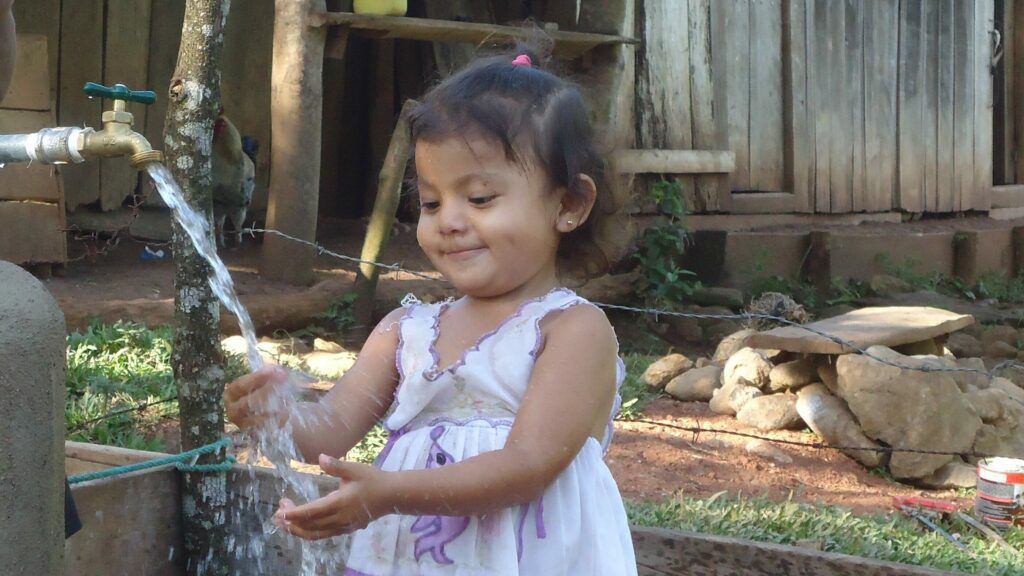
Tab has been working hard to keep our Nicaragua team safe. We prepaid staff wages to limit how often they needed to travel into town to do their banking. Our Project Coordinator was able to advance purchase the construction materials we needed for the two ongoing water projects, limiting community exposure to potential outside carriers of the virus. Fortunately, the work in the communities can mostly carry on as normal, being outside and socially distanced.  We are turning on in-home water service to 130 families this year, which eliminates the need for them to congregate at local water holes to collect life-sustaining water. 

Our financial capacity to fund those prepaid wages and material purchases that are helping 130 families(!) were the direct result of our fundraising efforts in the Fall of 2019.  As we kick into planning gear for our Fall 2020 annual fundraising efforts, we need your help more than ever, and we’ve listed those opportunities below for your thoughtful consideration. 

Our team and partners on the ground in Nicaragua share that this virus is spreading rapidly in the cities and smaller towns, but it hasn’t yet made its way into the remote communities with whom we collaborate. We’re proud that some of the students we sponsor had the motivation to advocate for online learning so they didn’t lose a year of schooling. The children we support know that education is the key to their future and we are grateful to all of you who invest in their futures.

With gratitude and best wishes for good health.
Selina Serna
Executive Director
Filed Under: News From the Field Tagged With: July 2020 Newsletter

Stories From The Field: A Student’s Journey Through Covid-19

July 10, 2020 by Renata

Since March, those of us who could work from home have been doing so for almost 4 months. In other places like Nicaragua, Covid-19 hasn’t reached its peak, and it’s nowhere in sight.

In Nicaragua, work continues due to the lack of safety net for most. People still need to go to work, take public transportation, and live their lives as if there isn’t a global pandemic at large. From the beginning, there were no clear guidelines provided or stay at home orders mandated, nor did schools shut down. Parents had to make tough choices to care for themselves and their families by determining whether to go to school or miss classes by sheltering in place. Fortunately, news about the danger of this virus was widespread and most parents are keeping their children home even without that government guidance being in place. They have been wearing masks, created innovative ways to wash hands, and have been able to take classes online. For one of our students, Mileydi, for whom not going back to school meant falling behind a year, and that was out of the question.  

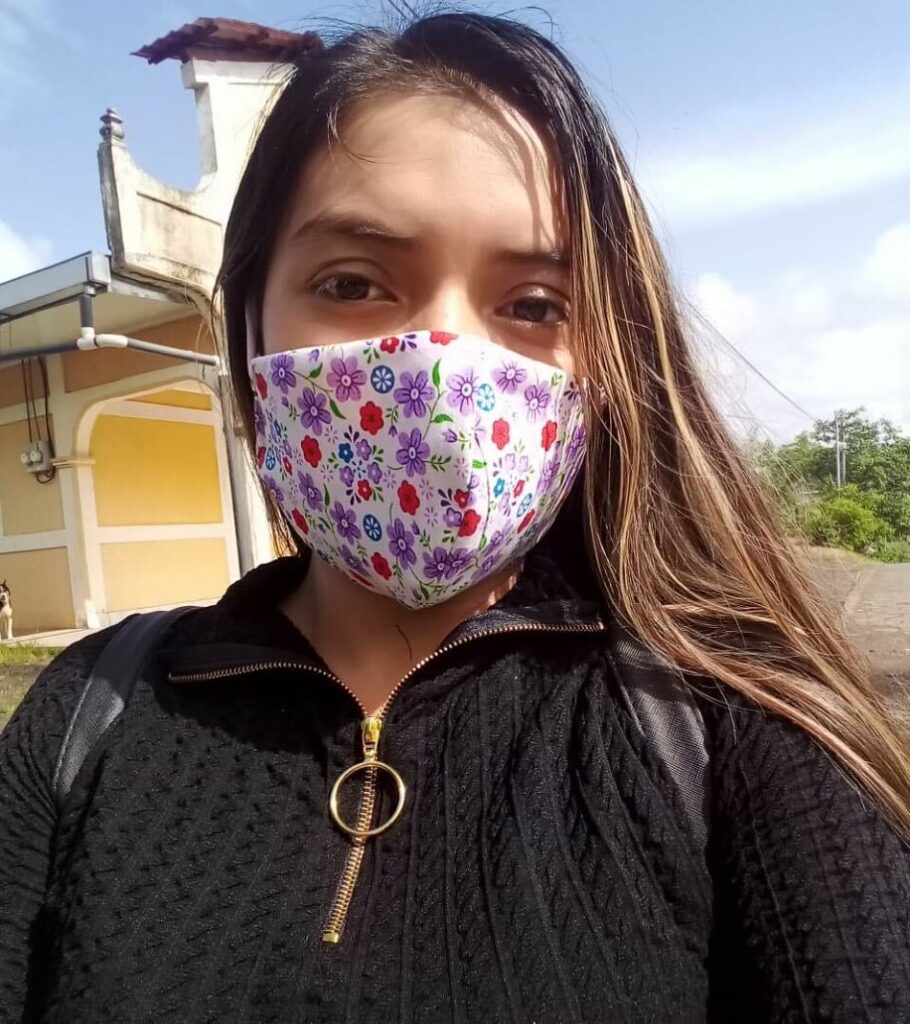
Project Schoolhouse has seen Mileydi grow up, providing a scholarship to help her complete high school and enter her first year of college. Mileydi graduated high school with top honors and is now pursuing a degree in Business Administration at a university in Rio Blanco, which is a 2-3 hour commute by foot from her hometown of Martillo. If this routine was not demanding enough, Mileydi now has to adjust to the unfamiliar situation of taking classes online. 

I called Mileydi one morning to hear how her online schooling experience has been going and this is what she told me: 

Renata: How did you start taking classes online?

Mileydi: The students took the initiative to push the school to move classes online; we organized and provided a  list of students who could take courses online. Some can, though not a lot.

Renata: How have professors changed their method of teaching?

Mileydi: We have this app that we use for classes. We also use WhatsApp. They send attachments of tests and handouts through these apps. 

Renata: Do you have wifi? A laptop?

Mileydi: No

Renata: What do you use for school?

Mileydi: I sometimes borrow a laptop if I can, if not I can go to a cyber café or I use my phone.

Renata: How do you use your phone?

Mileydi: I look at the tests, and I can read class notes, or videos they send.

Renata: 
What year are you in?

Miledy: First year of Business Administration.

Unfortunately, our conversation was a short one as I learned the call was costing Mileydi phone minutes. In Nicaragua, the majority of people do not have a monthly phone plan, they have prepaid SIM cards with limited data usage. 

What I found impressive from our conversation was Mileydi standing firm in the decision she took, after much discussion with her parents, to continue going to school and finding a way to do it safely. Mileydi persisted that she would not miss any classes or exams; her recent exams have come back with high marks. It was truly so admirable to hear her explain how she was taking classes on her phone. Despite a lack of resources, such as a computer or at-home wifi, Mileydi has been able to persevere with only a smartphone at her disposal. Not even a global pandemic can stop a girl from getting an education.

Filed Under: Education, News From the Field Tagged With: July 2020 Newsletter

Greetings from our Executive Director – “An Unprecedented Opportunity”

March 28, 2020 by Project Schoolhouse

Dear Friends,

Wow, how our world has changed in just a few short weeks. Our work continues and the need has never been greater, as is highlighted in industry publications we monitor, one of which we wanted to share with you below, ‘COVID-19 a collective failure, an unprecedented opportunity’. Sanitation and hygiene are the most basic needs, particularly today when diligent hand-washing is top of mind for the world, virtually impossible for those without access to clean water.

We are so pleased to share our 2019 Impact in the Annual Report linked below. Beyond the numbers, I’d like to also convey the emotion I see as I talk to moms who worry about the contaminated water they are forced to use all day, every day, to drink, bathe and cook, even when they see the rashes that break out on their children every time they bathe. Your generosity truly changes lives.

We had a strong kick-off to 2020, finishing up water and latrine projects in two communities. We visited the mayor of a neighboring region, Bocana de Paiwas, when touring the projects in early March and were thrilled to come away from that meeting with a commitment of funding towards a project in this region. As we were driving to the meeting, we took a right where we always take a left and Tab said “haven’t you always wanted to turn this way? I have.” It’s good to see our reputation spread and have the opportunity to expand our reach by tapping into additional municipal funding.

The mayor is excited to collaborate, allowing him to stretch his budget through investing in our community volunteer model of building. The area has some of the most stunning vistas I’ve had the pleasure of seeing, and I got to meet this cute little boy in the community of Bilampi. We hope to be able to build him a new school in the not too distant future.

In these uncertain times, please know that we wish you and your loved ones good health.

Selina Serna
Executive Director

Filed Under: News From the Field Tagged With: March 2020 Newsletter

Impact Report: A New Water System for El Aulo

March 28, 2020 by Project Schoolhouse

It’s been a long road to getting water to the community of El Aulo in Nicaragua. Twelve years ago Project Schoolhouse partnered with them to build a three-room schoolhouse but we were unable to build a permanent water system.

Persistent roadblocks involving the availability of springs and uncooperative landowners prevented us and other orgs from being able to assist this community until 2019 when we found a design that would work and got funding from Rotary International and the Burdine Johnson Foundation to finally start work on a water system.

Every project we complete involves serious problem solving and overcoming difficult logistical hurdles, but this project has been exponentially more difficult, even since we began construction in July 2019. One of those obstacles was that the spring providing water to the system was damaged through rogue deforestation and was only going to be able to provide sufficient water for 9 months of the year. On top of aggressive reforestation efforts, we solved this problem through an innovative hybrid system design that involves both a closed spring capture as well as an open water filtration system to provide additional water capacity during the three dry months of the year. To my knowledge, there isn’t another system like this in existence in Nicaragua or further afield.

To break this down, our most common method to harness spring water is to completely seal in the underground water source. This allows us to capture 100% of the spring water, which is already clean and free from contaminants and keep it clean inside a closed system. This is by far the best way to harness water and most of our systems are built like this.

The other way to harness water is to collect surface water with a small dam and then run it through a series of filtration structures to clean it. In El Aulo, we utilized both of these methods to ensure sufficient water to the community for a 30-year design spec accounting for population growth.

This particular open capture is, in my opinion, a work of art and science. Our lead engineer is one of the most respected water engineers in Central America and he built a system that takes water carefully filtered through underground gravel tunnels into another filter involving special fabric and special sand. From there it passes through an ultraviolet filtration process, through two de-sedimentation tanks, and then through another set of special fabric and sand before passing through a chlorination process. At this point the water is triple filtered, double de-sedimented, ultraviolet treated and chlorinated before being stored in a nearly 80,000-gallon storage tank.

The tank is nearly double the normal size in order to make the very best use of the closed capture spring water before turning on the open capture water. Even better, the system has very special controls that allow each part of the system to be turned on or off to allow for regular maintenance and water source management.
It took all the savvy Project Schoolhouse had accumulated in its 15-year history to make this project a reality and I’m thrilled that finally, the community of El Aulo will have a reliable and clean water source after years of carrying water by hand.

Tab Barker
Director of Operations

Filed Under: News From the Field, Water Tagged With: March 2020 Newsletter

  • « Go to Previous Page
  • Page 1
  • Interim pages omitted …
  • Page 5
  • Page 6
  • Page 7
  • About Us
  • Our Work
  • Progress
  • Get Involved
  • Donate
  • Contact Us
  • Privacy Policy

Footer

  • Email
  • Facebook
  • Instagram
  • LinkedIn
  • Vimeo